US Supreme Court allows 'light' cigarettes lawsuits
Licensed archive · Attributed source reporting
411 Brief
The United States Supreme Court on Monday ruled that "tobacco companies that marketed 'light' and 'low tar' cigarettes may be sued for fraud." The 5-to-4 judgment is expected to open the way for dozens of lawsuits claiming billions of dollars in damages. In the certiorari ruling penned by Justice Stevens, the Court held that a class action brought under state law prohibiting deceptive advertising generally was not preempted by federal law regulating cigarette advertising. The lawsuit claims that tobacco makers who manufacture "light" and "low
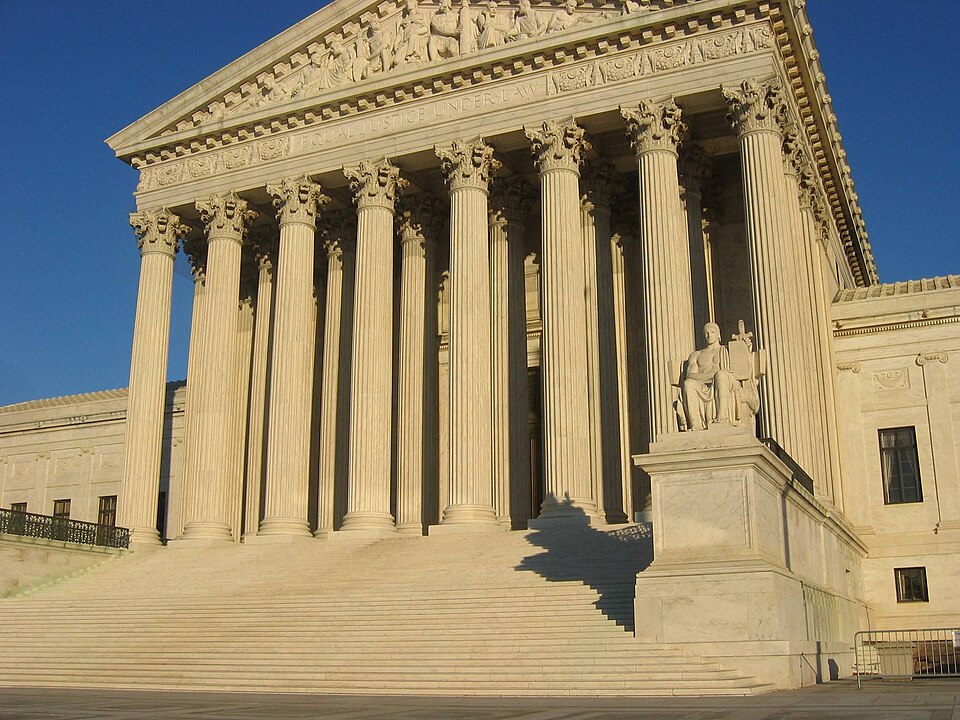
The United States Supreme Court on Monday ruled that "tobacco companies that marketed 'light' and 'low tar' cigarettes may be sued for fraud." The 5-to-4 judgment is expected to open the way for dozens of lawsuits claiming billions of dollars in damages.
In the certiorari ruling penned by Justice Stevens, the Court held that a class action brought under state law prohibiting deceptive advertising generally was not preempted by federal law regulating cigarette advertising. The lawsuit claims that tobacco makers who manufacture "light" and "low tar" cigarettes had deceived smokers into thinking the products are safer than regular cigarettes. Former United States Solicitor General Theodore Olson, now working with Gibson, Dunn & Crutcher, argued the case for the petitioners, Altria Group and Philip Morris USA.
Several smokers in recent decades switched to light cigarettes, with fervent faith they posed less of a danger to their health. But scientific or medical researches have shown this common-sense view is wrong. Although mechanical tests showed "light" cigarettes emitted less tar when burned, actual smokers inhale about the same amount of tar when they puff on a light cigarette, the studies found. The cigarette business faces more than 30 class-action lawsuits from smokers and ex-smokers who seek billions of dollars in damages and claim they were deceived by the marketing of light and low-tar cigarettes.
Respondents Stephanie Good and 2 others are Maine residents and for over 15 years smoked Marlboro Lights and Cambridge Lights cigarettes, which are manufactured by petitioners Altria Group and Philip Morris USA. They sought damages compensation for economic rather than medical harm, claiming they had overpaid for cigarettes based on fraudulent advertisements suggesting that light cigarettes were safer than regular ones. The Labeling Act requires tobacco companies to indicate rotating warnings on their packaging and advertising. “No requirement or prohibition 'based on smoking and health' shall be imposed under state law with respect to the advertising or promotion,” the law provides, and only if the labeling requirements on cigarettes are obeyed.
In the case, the Court applied the pertinent Federal laws, in question, Title 15 U.S.C. § 1334(b), the "Federal Cigarette Labeling and Advertising Act" and Me. Rev. Stat. Ann., Tit. 5, § 207 (Supp. 2008), the "Maine Unfair Trade Practices Act" (MUTPA). It held that "the Labeling Act neither expressly nor impliedly pre-empts respondents’ fraud claim." The landmark decision allows the lawsuit to proceed on the merits upon remand to the trial court below. The ruling strikes a blow against a broad effort by U.S. corporations to limit their exposure to lawsuits filed under federal law.
The court also dismissed Philip Morris's argument that the Federal Trade Commission's mid-1960s endorsement of machine testing of cigarette tar and nicotine levels "should relieve the company of liability for alleged fraud." In November, the FTC officially dropped its endorsement of the Cambridge Filter Method, saying it is flawed because "the machine doesn't take into account the way smokers adjust their behavior."
The Supreme Court in a June ruling, said 8 to 1 that "a case filed in a state court alleging a defective catheter was pre-empted by a federal statue providing regulation of medical devices to the U.S. Food and Drug Administration." The court also ruled in 1992 in 'Cipollone v. Liggett Group, Inc.' that "the phrase 'based on smoking and health' in the Labeling Act did not apply to pre-empt suits under state laws based on the 'general duty' not to make fraudulent statements."
Justice Clarence Thomas said that "some kinds of fraud claims against cigarette makers may go forward, just not those concerning smoking and health. Thus, if cigarette manufacturers were to falsely advertise their products as ‘American-made’ or ‘the official cigarette of Major League Baseball,’ state-law claims arising from that wrongful behavior would not be pre-empted. Forbidding lawsuits based on health claims, would not mean consumers lack protection, as tobacco marketing is subject to regulatory oversight."
Altria's associate general counsel, Murray Garnick, in a statement, said "we continue to view these cases as manageable, and the company will assert many of the strong defenses used successfully in the past to defend against this very type of case."
Sources & reporting note
Licensed archive reporting by Wikinews contributors. Text: CC BY 2.5 (https://creativecommons.org/licenses/by/2.5/). Original source date retained. 411 has not independently verified this archive report.
Read the source: Wikinews ↗Source published 17 Dec 2008, 05:30 am IST